How to Assess Anion Gap Acidosis with an Anion Gap Calculator
What Is an Anion Gap and Why Does It Matter?
The anion gap is a helpful way to measure metabolic acidosis and determine whether extra acid is likely present in the blood. It represents the difference between the major measured cations and anions on a standard serum electrolytes or serum chemistry panel, typically using serum sodium, serum chloride, and serum bicarbonate. Because many acids are not directly measured, the anion gap helps reveal an anion difference that indicates hidden acid accumulation.
This makes the anion gap important in a careful evaluation of acid-base balance. If the gap is elevated, the problem is usually high anion gap metabolic acidosis. If the gap is normal, the issue may be normal anion gap metabolic acidosis, which often indicates bicarbonate loss or chloride retention. Either way, the result is only meaningful when interpreted in clinical context along with the rest of the laboratory assessment.
The anion gap is not a diagnosis by itself. It is a indicator that guides the diagnostic approach. In practice, it helps https://anion-gap-reference252.scriblorax.com/posts/anion-gap-calculator-for-complex-acid-base-conditions distinguish acid-base disorders caused by added acids from those caused by bicarbonate loss, and it can indicate important underlying causes such as lactic acidosis, ketoacidosis, renal failure, or toxic ingestion. That is why an anion gap calculator is valuable: it speeds up interpretation while minimizing the chance of arithmetic mistakes during a busy clinical review.
How to Work Out the Anion Gap Step by Step
An anion gap calculator generally uses a basic formula based on standard serum chemistry values. The usual equation is:
Anion gap = serum sodium − (serum chloride + serum bicarbonate)
Some calculators may also adjust for albumin, which is important because albumin is a significant unmeasured anion. When albumin is low, the measured anion gap can appear falsely normal. That is why many clinicians use an albumin-corrected anion gap to enhance interpretation.
To calculate the gap stepwise:
- Check the serum sodium value.
- Examine the serum chloride value.
- Check the serum bicarbonate value.
- Subtract chloride and bicarbonate from sodium.
- If albumin is abnormal, perform albumin correction to obtain a corrected value.
For example, if serum sodium is 140, serum chloride is 100, and serum bicarbonate is 20, the anion gap is 20. If albumin is low, the corrected result may be higher than the raw number suggests. This is why calculator-based review is helpful: it standardizes the math and supports a more accurate interpretation of the metabolic derangement.
Most clinicians also consider whether the electrolyte panel was drawn with a blood gas or from routine serum chemistry. Different sample types, timing, and reporting conventions can change the final number. A calculator helps, but it does not replace clinical judgment or review of the full laboratory assessment.
What Is the Usual Anion Gap Interval?
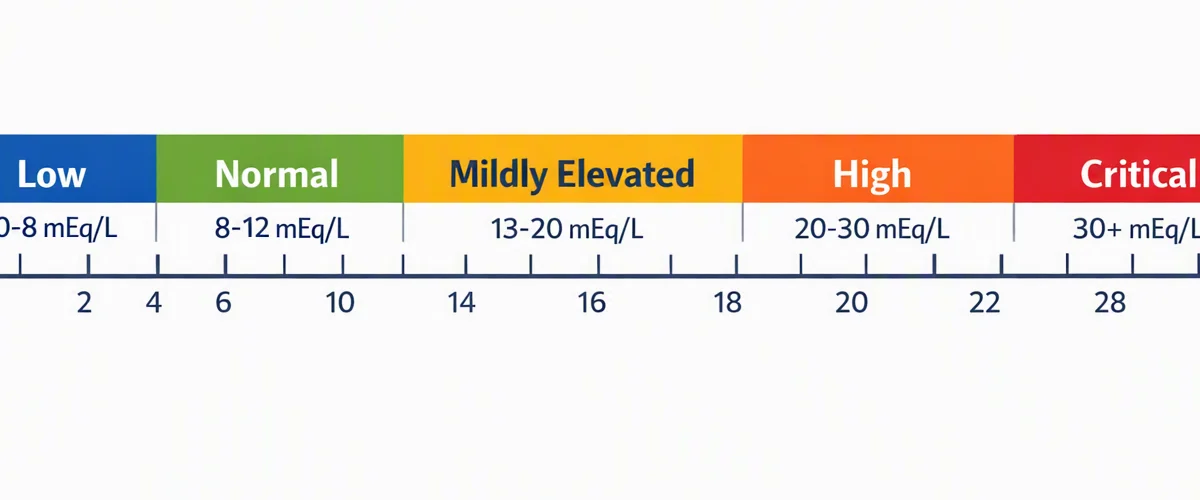
The normal range for the anion gap depends on the laboratory lab standard, the analyzer, and whether potassium is included in the formula. Because of this, there is no single universal number. The best practice is to interpret the result using the lab values and the specific reference interval reported by that laboratory.
In general, a higher-than-expected gap suggests unmeasured acids are present, while a normal or low value may indicate another acid-base disorder or a calculation issue. Albumin matters here as well. Since low albumin lowers the observed gap, an albumin-adjusted calculation may reveal a hidden elevation that was not obvious from the raw result.
That is why the corrected value is often more helpful than the unadjusted number in patients with illness, inflammation, malnutrition, or liver disease. A normal-looking gap in the setting of low albumin can be misleading if you do not account for the albumin effect. The corrected result provides a better estimate of the true acid-base status and improves diagnostic accuracy.
Always interpret the number in context. A value that is borderline for one lab may be abnormal for another. A careful review of test values, albumin, and the overall acid-base picture is the best way to avoid overcalling or missing a disorder.
What Causes High Anion Gap Metabolic Acidosis?
High anion gap metabolic acidosis happens when acids collect faster than the body can offset or remove them. The gap increases because bicarbonate is consumed while unmeasured anions increase. The most useful way to evaluate the differential is to think in terms of acid generation, acid accumulation, and toxic exposure.
Common causes include ketoacidosis, lactic acidosis, renal failure, and toxic ingestions. These are among the key diagnostic clues because they can worsen quickly and often require urgent treatment.
Ketoacidosis can occur in diabetes, starvation, or alcohol use. Diabetic ketoacidosis is a well-known causes and often presents with elevated glucose, ketones, and a marked metabolic derangement. In this setting, the anion gap calculator helps follow severity and response to therapy as the gap improves.
Lactic acidosis is another important cause. It can result from tissue hypoperfusion, sepsis, seizures, hypoxia, or certain medications. Because lactate is an unmeasured anion, it increases the gap and indicates acid accumulation.
Renal failure results in retention of organic acids and impaired clearance of sulfate, phosphate, and other acids. The anion gap may rise gradually as kidney function worsens, so the clinical context and creatinine trends should be reviewed.
Toxic alcohols are a major consideration in unexplained high anion gap states. Methanol, ethylene glycol, and related exposures can cause severe acidosis and organ injury. Salicylates can also produce mixed acid-base findings, sometimes with respiratory alkalosis and high anion gap acidosis. In these cases, rapid recognition is vital.
The key point is that a high gap is a clue, not a final answer. It should lead to a focused search for the underlying cause rather than stand alone as the diagnosis.
How Should You Read a Elevated Anion Gap Finding?
Reading the result starts with the acid-base status and the patient’s symptoms. A elevated anion gap finding should be paired with blood gas data and the measured pH to confirm the disorder and evaluate compensation. The blood gas helps determine whether acidosis is present, whether there is a mixed disorder, and how severe the acid-base disturbance is.
A useful acid-base interpretation framework is to ask three questions:
- Is there true metabolic acidosis on the blood gas?
- Is the anion gap high beyond the expected reference interval?
- Does the pattern fit the clinical picture and suspected cause?
Once high anion gap metabolic acidosis is confirmed, the next step is often to calculate the delta gap and, when needed, the delta-delta ratio. These tools compare the rise in anion gap to the fall in bicarbonate. They help identify whether the patient has a mixed disorder, such as simultaneous metabolic alkalosis or a second acidosis.
If the delta gap suggests that bicarbonate has fallen more than expected for the rise in anion gap, there may be an additional normal-gap acidosis. If the opposite is true, a concurrent metabolic alkalosis may be present. This is important in the diagnostic approach because it prevents you from assuming there is only one process at work.
Always relate the numbers to the patient. The severity of illness, the trend in laboratory assessment, and the response to treatment matter as much as the initial result. An elevated gap with worsening pH and worsening blood gas findings is more urgent than a stable abnormality in a clinically improving patient.
What Is the Contrast Between High and Usual Anion Gap Acidosis?
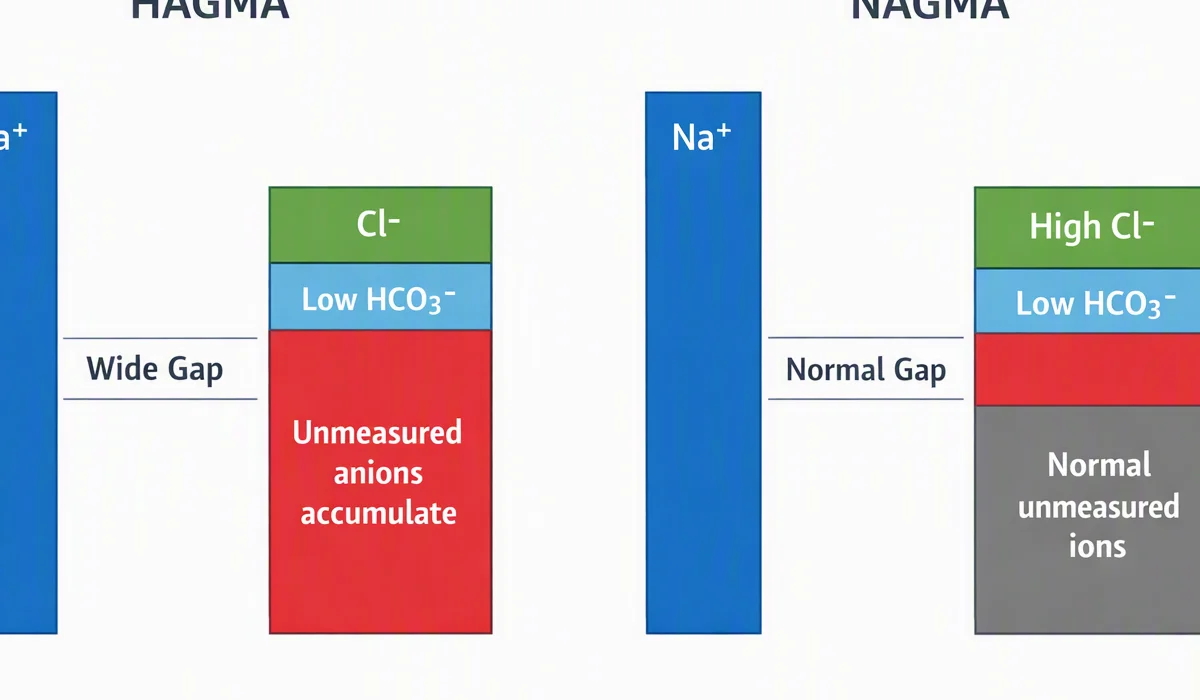
The primary distinction is the cause of the fall in bicarbonate. In non-anion gap metabolic acidosis, bicarbonate is lost or replaced by chloride, so the anion gap stays normal even though acidosis is present. In increased-gap disorders, unmeasured acids accumulate and widen the gap.
A classic cause of normal-gap acidosis is hyperchloremia. As bicarbonate is lost, chloride rises to maintain electrical neutrality. This pattern is often seen with GI bicarbonate loss or certain renal disorders. The serum chemistry may show low bicarbonate with a relatively high chloride, but no significant rise in the anion gap.
Bicarbonate loss can occur from diarrhea, fistulas, or renal causes. Another important cause is renal tubular acidosis, a group of disorders in which the kidneys cannot appropriately excrete acid or conserve bicarbonate. These conditions often produce normal-gap acidosis rather than a high gap.
The distinction matters because treatment differs. A high-gap disorder usually demands identification of acid production or retention, while a normal-gap disorder often requires evaluation of bicarbonate loss, kidney tubular function, and electrolyte abnormalities. Both are forms of metabolic acidosis, but their mechanisms and management strategies are different.
In short, a high anion gap points to added acid; a normal gap often points to bicarbonate loss or chloride gain. The calculator helps separate the two, but the overall diagnostic approach still depends on the clinical story and the full electrolyte panel.
Which Lab Tests Aid in Confirming the Underlying Cause?
After a high anion gap is identified, specific tests aid in confirming the underlying cause. The most frequent are serum lactate, ketones, creatinine, and the osmolar gap. These tests are chosen based on the suspected diagnosis and the clinical setting.
Serum lactate is essential when lactic acidosis is possible. Elevated lactate suggests impaired oxygen delivery, poor perfusion, or another process causing acid accumulation. It is one of the most useful diagnostic clues in acutely ill patients.
Ketones support ketoacidosis, including diabetic ketoacidosis. If ketones are elevated and the patient has hyperglycemia or other supportive findings, the diagnosis becomes much more likely.
Creatinine is used to assess kidney function and can support renal failure as the underlying source. Rising creatinine does not prove the anion gap is caused by kidney disease, but it offers important context for the laboratory assessment.
The osmolar gap is especially useful important when toxic alcohols are suspected. A widened osmolar gap can support a toxic ingestion early, although timing matters and a normal osmolar gap does not fully exclude exposure. When salicylates are suspected, specific drug testing is necessary because they can present with complex acid-base disorder patterns.
Depending on the case, other studies may include arterial or venous blood gas, glucose, beta-hydroxybutyrate, urinalysis, and toxicology testing. The goal is to pair the anion gap result with confirmatory data so the diagnostic approach leads to the underlying cause rather than speculation.
When to Recheck or Review the Anion Gap?
Review or repeat the anion gap when the clinical picture shifts, when therapy is initiated, or when the original result does not match the rest of the data. Retesting is particularly helpful if the number is unusual or if there is concern for lab error.
Lab trends are often more informative than a single value. A falling gap can show improvement in ketoacidosis or lactic acidosis, while a continuously high gap may suggest ongoing acid production, incomplete treatment, or a missed cause. Serial review can also help differentiate a true metabolic disorder from a transient fluctuation.
Albumin status should also be revisited. If the patient’s albumin changes, the albumin adjustment may change the interpretation of the result. This is especially crucial in hospitalized patients, who often have shifting serum chemistry values and fluctuating protein levels.
Most importantly, use clinical correlation. A lab number that seems abnormal must still fit in the patient’s story, symptoms, medications, and exam. If it does not, reconsider assumptions, sample timing, or whether a mixed disorder is present.
Common Mistakes When Using an Anion Gap Calculator
One common mistake is ignoring measurement assumptions. Different calculators may assume different reference intervals, different formulas, or whether potassium is included. A result can look meaningful while actually being based on a different calculation method than the one used by the lab.
Another mistake is overlooking units. If sodium, chloride, and bicarbonate are reported in the expected units, the formula works as intended; if not, the number may be misleading. Always check the report format before relying on the calculation.
Albumin is another frequent source of error. Failing to apply the corrected anion gap when albumin is low can hide a true gap elevation. Likewise, overcorrecting or using the wrong correction factor can distort interpretation.
Lab error should also be considered when the result is inconsistent with the clinical picture. Hemolysis, specimen contamination, or reporting errors can lead to inaccurate values. If the result is unusual, verify it before responding.
The biggest practical pitfall is treating the calculator as the final judgment. The calculator supports interpretation, but it does not replace a full thorough evaluation of acid-base balance, the electrolyte panel, and the patient’s presentation. Use it as one element in a broader diagnostic workup.
FAQs About Anion Gap Acidosis
What does a high anion gap mean?
A high anion gap usually means there is an excess of unmeasured acids in the blood. This pattern often occurs in metabolic acidosis and can point toward lactic acidosis, ketoacidosis, renal failure, or toxic alcohols. The number should always be evaluated with the blood gas, pH, and clinical picture.
How do you calculate anion gap with albumin correction?
Start with the standard anion gap formula using serum sodium, serum chloride, and serum bicarbonate. Then modify for albumin because low albumin can make the gap look falsely normal. Many clinicians use an albumin-corrected anion gap to better estimate the true acid-base disorder.
What are the most common causes of anion gap acidosis?
The most common causes include lactic acidosis, ketoacidosis, diabetic ketoacidosis, renal failure, toxic alcohols, and salicylates. These conditions all create acid accumulation or introduce unmeasured anions that elevate the gap.
What tests should be ordered after finding a high anion gap?
Common follow-up tests include serum lactate, ketones, creatinine, blood gas, and osmolar gap testing when toxic ingestion is possible. The best test list depends on the likely underlying cause and the rest of the blood chemistry panel.
Can an anion gap be normal even when acidosis is present?
Yes. A normal gap can still occur in metabolic acidosis, especially in normal anion gap metabolic acidosis. This often reflects bicarbonate loss, hyperchloremia, or renal tubular acidosis rather than added unmeasured acids. That is why full acid-base interpretation matters.