Can Elevated sodium Influence the Anion Gap?
What the Anion Gap Shows
The anion gap is a derived value that assists clinicians gauge acid-base balance and recognize particular forms of metabolic acidosis. It is often derived from a common electrolyte test that includes serum sodium, serum chloride, and serum bicarbonate. Since it is calculated rather than directly measured, the anion gap is a useful clue in clinical interpretation rather than a diagnosis by itself.
The usual math formula is often written as:
anion gap = serum sodium - (serum chloride + serum bicarbonate)This formula shows the balance between measured cations and anions in serum chemistry. When the gap is higher than expected, it can suggest the presence of unmeasured particles such as lactate or ketones. If it is within range, that does not always mean everything is normal; it may simply mean the electrolyte disturbance is not creating a gap pattern.
Reviewing the reference interval matters because different laboratories may use somewhat different methods and ranges. This is why the same lab values can look normal in one setting and borderline in another. An anion gap calculator helps standardize the math, but the result still needs clinical context.
In What Way Hypernatremia Alters the Calculation
Hypernatremia indicates an elevated sodium concentration in the blood. Because sodium is part of the anion gap formula, many people assume that sodium elevation automatically increases the gap. In reality, the answer is more nuanced. A higher sodium value can raise the calculated number, but only if chloride and bicarbonate do not rise in a parallel way.
The body tries to maintain electrolyte balance and osmotic balance across compartments. When serum sodium increases, it often reflects water loss rather than an isolated sodium gain. That means the lab pattern may show a concentrated blood sample with higher sodium, but the anion gap may remain unchanged if the accompanying ions shift proportionally.
Therefore, does hypernatremia affect the result? Indeed, mathematically it can. But clinically, hypernatremia does not automatically create an abnormal anion gap. The key question is whether the sodium elevation is part of a broader acid-base disorder or simply a sign of volume depletion or free water deficit.
This is why the anion gap calculator should be used as part of a diagnostic approach rather than as a stand-alone answer. The result should be interpreted alongside the chloride level, bicarbonate level, albumin, and the overall serum chemistry picture.
Does High sodium Really Increase the Anion Gap?
Hypernatremia can influence the number on paper, but it does not directly cause high anion gap metabolic acidosis. A normal anion gap or a slightly changed value is much more common when sodium is elevated without another acid-base process. The gap becomes clinically meaningful only when it shows a shift in unmeasured substances, not just a change in one measured electrolyte.
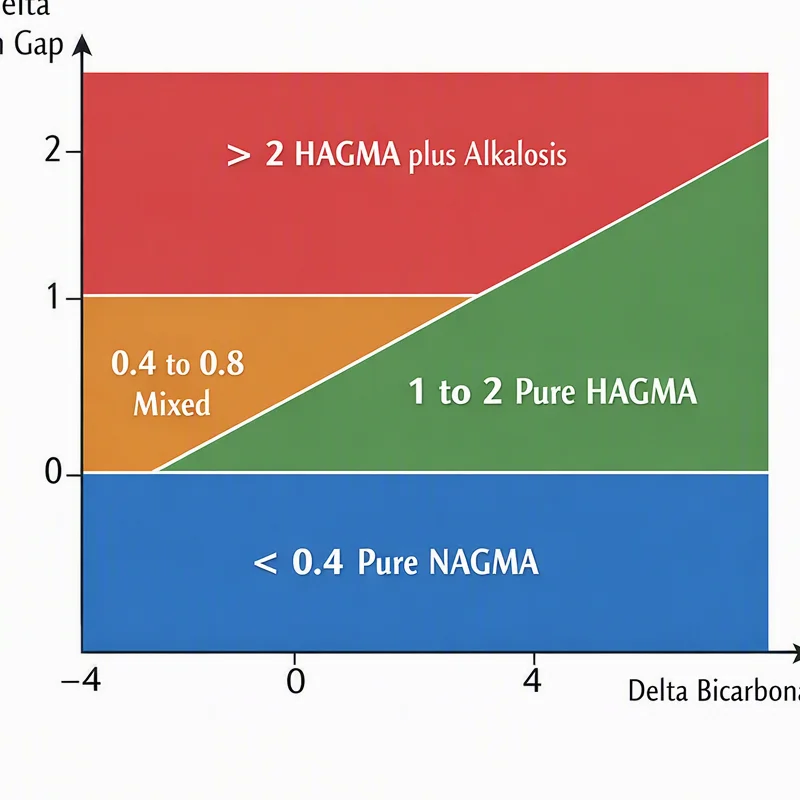
That distinction matters because the body’s plasma is electrically neutral overall. The anion gap is a surrogate marker for the difference between measured and unmeasured ions. If sodium rises because of free water loss, the concentration of many solutes may go up together, and the gap may not change much. If sodium rises while bicarbonate falls from an acid load, then the anion gap may become elevated for reasons unrelated to the sodium itself.
Plasma osmolality also helps explain this pattern. Hypernatremia usually increases osmolality, which signals a water deficit or solute excess. That tells you about hydration and tonicity, but not necessarily about a gap-producing metabolic derangement. In other words, sodium elevation and anion gap elevation are related only when another process links them.
Many clinicians separate these questions this way: Is there hypernatremia? Is there acidosis? If yes, is the acidosis a normal anion gap metabolic acidosis or a high-gap state? This stepwise thinking prevents mislabeling a sodium problem as an acid-base problem.
Common Causes of Hypernatremia Along With Stable Anion Gap
Most cases of hypernatremia occur because of dehydration or a overall loss of water relative to sodium. When this happens, the anion gap often remains normal. That is because the primary issue is free water loss, not the build-up of acid anions.
One common cause is diabetes insipidus, a condition in which the kidneys cannot conserve water appropriately. As a result, the person may lose large amounts of dilute urine and develop a free water deficit. The serum sodium rises, but the anion gap may remain in the reference range unless another disorder is present.
Other contributing factors include poor oral intake, excessive sweating, fever, vomiting with inadequate water replacement, and renal losses. In these situations, the electrolyte disturbance reflects impaired water balance more than acid production. The blood chemistry may show concentrated lab values, but not necessarily an acid-base disorder.
A normal anion gap in hypernatremia should not be dismissed as unimportant. It can still point to clinically significant volume depletion, altered mental status, or kidney stress. The key is to separate the sodium problem from a true gap-acidosis process.
When an Elevated Anion Gap Suggests A Different Issue
If the anion gap is increased in a patient with hypernatremia, that usually means a separate condition is contributing. The main concern is metabolic acidosis from extra acids or reduced acid removal. This is where the differential diagnosis becomes crucial.
Lactic acidosis is a frequent cause, especially in poor perfusion, sepsis, hypoxia, or severe hypoperfusion. In this setting, rising lactate adds unmeasured anions and drives a high anion gap metabolic acidosis. Hypernatremia may coexist because of water deficit, poor intake, or osmotic water loss, but it is not the root cause of the gap.
Ketoacidosis is another important cause. Diabetic ketoacidosis, alcoholic ketoacidosis, and starvation ketosis can all raise the gap. These cases may also include dehydration and hypernatremia due to low volume status and osmotic diuresis. Again, the sodium change does not explain the gap by itself.
Renal failure can also elevate the anion gap because the kidneys cannot excrete acid properly. Uremic retention of organic acids contributes to the gap, and sodium may be high, normal, or low depending on fluid status and treatment history.
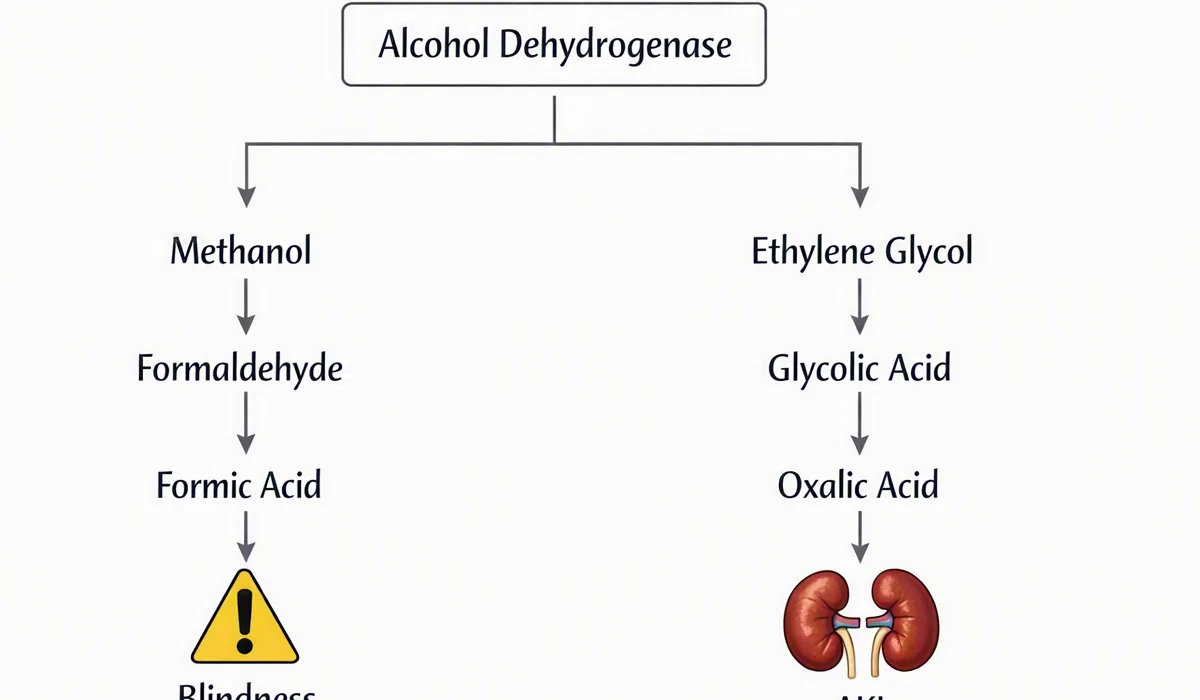
Toxic alcohols such as methanol or ethylene glycol are high-risk causes of high-gap acidosis. They create acidic metabolites that increase the anion gap and may also affect serum osmolality early in the course. This is one reason hypernatremia should never be interpreted in isolation.
How to Understand Findings With an Anion Gap Calculator
An anion gap calculator is valuable for efficiently computing the result from lab values and reducing arithmetic errors. A useful workflow opens with the basic formula, then checks whether the number falls within the lab’s reference interval. If the result is unexpectedly high or low, the next step is to recheck the entire electrolyte panel and ask whether the pattern aligns with the clinical picture.
Albumin is especially important. Because albumin is a major unmeasured anion, low albumin can make the anion gap look falsely typical or reduced. In that situation, an albumin-corrected anion gap provides a more precise corrected result. This matters when evaluating suspected acidosis, because hypoalbuminemia can obscure a clinically meaningful gap.
Careful lab interpretation should include:
- Review serum sodium, serum chloride, and serum bicarbonate in combination
- Check whether there is evidence of metabolic acidosis
- Determine whether the pattern suggests normal anion gap metabolic acidosis or high anion gap metabolic acidosis
- Correct for albumin when it is low
- Rely on the full clinical picture, not the calculator alone
The calculator is most useful when it supports a broader diagnostic reasoning process. For example, a high sodium value with normal bicarbonate and normal chloride may produce only a modest change in the gap. But if bicarbonate is low and the patient is acidotic, the same number can become more significant. That is why the result must be interpreted in context of serum chemistry and symptoms.
Medical Illustrations of Hypernatremia and Anion Gap Findings
Case example 1: A patient with poor fluid intake has an electrolyte panel showing high sodium, fairly normal chloride, and normal bicarbonate. The calculated anion gap is in the expected range. This pattern matches hypernatremia from dehydration or a free water deficit, not a primary gap acidosis. The diagnostic reasoning centers on volume status and water replacement rather than acid accumulation.
Example 2: Another patient with diabetes has hypernatremia, low bicarbonate, and an elevated gap. The clinical picture indicates ketoacidosis. Here, the sodium elevation may reflect osmotic diuresis and water loss, while the gap elevation reflects acid production. The acid-base disorder is driven by ketones, not sodium alone.
Example 3: A critically ill patient has hypernatremia, elevated lactate, and a high anion gap. This pattern is consistent with lactic acidosis from poor perfusion or shock. The sodium change may be secondary to dehydration or treatment effects, while the gap points to a serious underlying cause.
Scenario 4: A patient with declining kidney function shows hypernatremia and an increased anion gap with low bicarbonate. In this scenario, renal failure may be responsible for impaired acid clearance. The electrolyte panel supports a high-gap metabolic problem rather than an isolated sodium abnormality.
These examples show why a single number is rarely enough. The best approach combines the calculator, the electrolyte panel, and clinical interpretation. That combination helps distinguish a simple sodium elevation from a dangerous acid-base disorder.
When to Seek Professional Evaluation
Hypernatremia can become serious quickly, especially if it appears over a brief time or is accompanied by other mineral disturbances. Clinical assessment is important if there are neurological signs such as disorientation, weakness, irritability, seizures, or decreased responsiveness. These findings can indicate substantial cerebral strain from osmotic shifts.
Urgent review is also important when there is a marked salt imbalance, persistent vomiting, inability to keep fluids down, or signs of major volume depletion. A patient with hypernatremia plus suspected acidosis may need urgent testing to determine whether the cause is dehydration, renal dysfunction, ketoacidosis, toxic alcohol exposure, or another dangerous cause.
If hypernatremia occurs during an recent illness, particularly with fever, infection, altered mental status, or rapid breathing, the risk of a broader metabolic derangement rises. In those settings, emergency care may be needed to stabilize fluids, assess kidney function, and evaluate for high-gap acidosis or toxic ingestion.
Do not use on an online calculator alone when symptoms are severe. An anion gap calculator is a helpful tool, but sudden neurologic changes, marked dehydration, or suspected poisoning require prompt clinical assessment.
FAQ
Can hypernatremia affect the anion gap directly?
Hypernatremia can change the calculated value because sodium is part of the formula, but it does not directly cause a true gap elevation. A higher serum sodium may increase the number mathematically, yet the clinical meaning depends on chloride, bicarbonate, albumin, and whether there is an underlying acid-base disorder.
Why might the anion gap stay normal in hypernatremia?
The gap often stays normal when hypernatremia is caused by water loss, diabetes insipidus, or other forms of loss of free water without added acid production. In those cases, the main issue is water imbalance, not accumulation of unmeasured charged particles, so the gap may remain within the reference interval.
Should albumin be corrected when using an anion gap calculator?
Absolutely, especially if albumin is low. Because albumin contributes to the normal anion gap, low levels can hide a real elevation. An albumin-corrected anion gap provides a more accurate corrected result and improves lab interpretation.
What causes hypernatremia with a high anion gap?
Common causes include disorders that create high anion gap metabolic acidosis, such as lactic acidosis, ketoacidosis, renal failure, and toxic alcohols. Hypernatremia may coexist because of dehydration, osmotic diuresis, or water loss, but the elevated gap usually reflects another metabolic https://anion-gap-reader788.lumenforgex.com/posts/anion-gap-calculator-for-reviewing-electrolyte-abnormalities problem.
When is hypernatremia a medical emergency?
Hypernatremia becomes urgent when it is severe, developing quickly, or accompanied by neurologic symptoms, significant dehydration, or an acute illness. It also requires urgent evaluation if there is concern for major acid-base imbalance, kidney failure, or toxic ingestion. In those situations, emergency care may be necessary.